
Absorbable threads have become an important part of modern aesthetic medicine. Among the materials used for aesthetic thread procedures, PDO and PLCL threads have attracted attention because they offer different material characteristics and degradation profiles.
Understanding PDO vs PLCL Threads can help aesthetic professionals evaluate thread materials according to the intended procedure, tissue characteristics, thread design, and clinical requirements.
Although both materials belong to the broader category of absorbable polymers, they are not identical. Their chemical composition, mechanical characteristics, and degradation behavior can differ. Therefore, professionals should evaluate the complete product design rather than selecting a thread based only on its material.
Alpha Surgical provides professional aesthetic and surgical products designed around practical clinical requirements, including products used in dermatology, aesthetics, and related healthcare applications.
What Are PDO Threads?
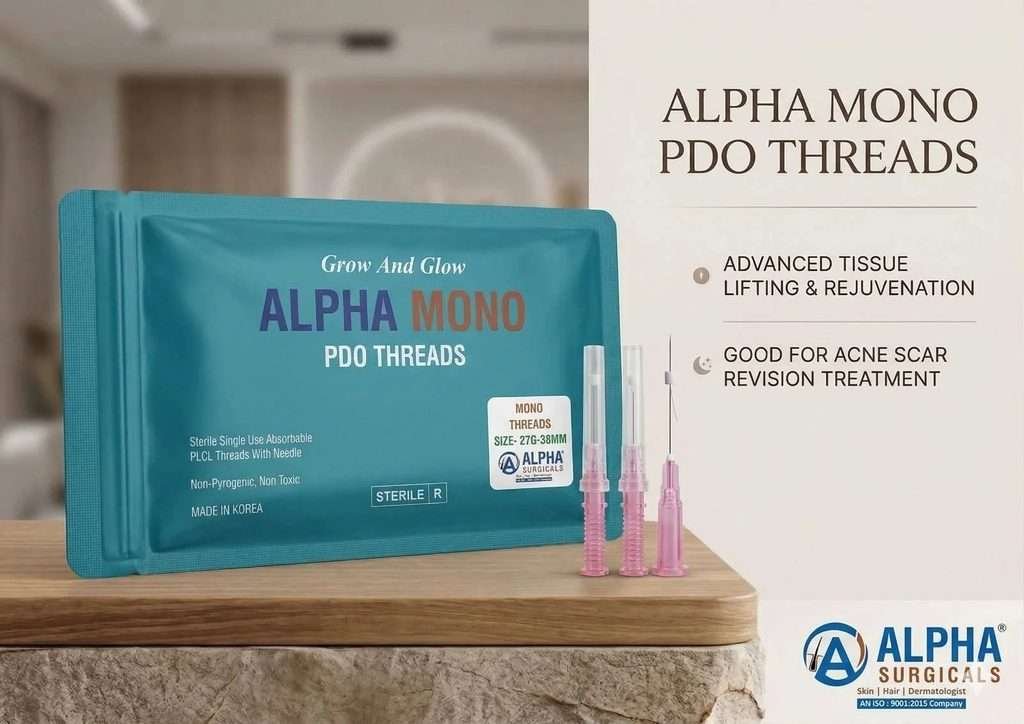
PDO stands for polydioxanone, a biodegradable synthetic polymer that has been used in absorbable surgical sutures and aesthetic thread products.
In aesthetic medicine, PDO threads may be designed as smooth, twisted, or barbed threads. Different designs serve different purposes. For example, smooth threads are generally associated with skin-quality and collagen-remodeling applications, while barbed designs can provide mechanical tissue engagement for lifting procedures.
PDO undergoes hydrolysis within the body. However, the exact persistence and degradation period can vary according to the product, thread structure, implantation site, and other factors. Published reviews report different timelines, so manufacturers’ specifications should guide product-specific expectations.
What Are PLCL Threads?
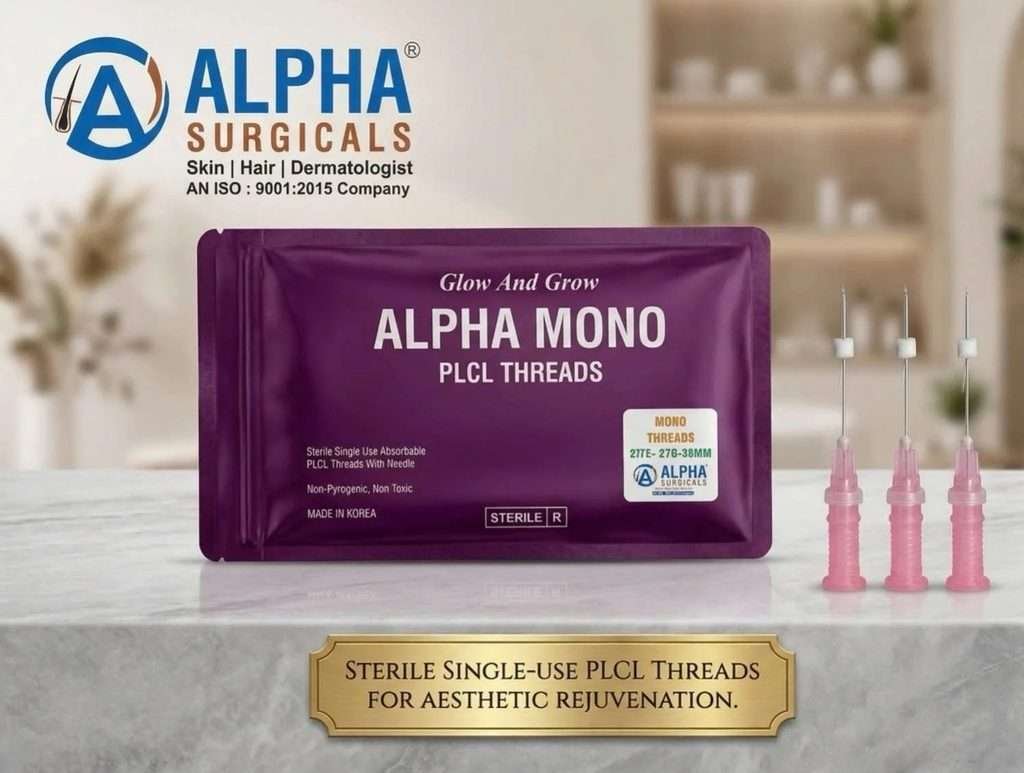
PLCL commonly refers to poly(L-lactide-co-ε-caprolactone), a copolymer that combines lactide and caprolactone components.
Researchers have investigated PLCL for biomedical applications because its polymer structure can provide a different degradation profile from shorter-duration absorbable materials. In aesthetic thread applications, PLCL has been developed for soft-tissue repositioning and other applications where longer material persistence may be desirable.
However, PLCL should not be treated as a single standardized thread product. The polymer ratio, manufacturing process, thread structure, barbs, coating, and overall design can influence the product’s physical behavior.
PDO vs PLCL Threads: What Is the Main Difference?
The main difference between PDO vs PLCL Threads lies in their polymer composition and resulting material characteristics.
| Feature | PDO Threads | PLCL Threads |
|---|---|---|
| Full name | Polydioxanone | Poly(L-lactide-co-ε-caprolactone) |
| Material type | Synthetic absorbable polymer | Synthetic absorbable copolymer |
| Degradation | Generally faster than many PLCL formulations | Often designed for slower degradation |
| Common designs | Smooth, twisted, barbed | Smooth and lifting/barbed designs depending on product |
| Aesthetic applications | Skin rejuvenation and lifting | Skin rejuvenation and soft-tissue repositioning |
| Collagen remodeling | Reported with aesthetic thread use | Associated with tissue remodeling and prolonged material presence |
| Selection | Depends on procedure and product design | Depends on procedure and product design |
The comparison should always consider the individual product specification. A material name alone does not determine clinical performance.
PDO vs PLCL Threads: Absorption and Longevity
Absorption is one of the most important points when comparing PDO vs PLCL Threads.
PDO threads undergo hydrolytic degradation. Published literature commonly describes PDO as a relatively shorter-duration absorbable material, although reported timelines vary considerably between products and studies.
PLCL can show slower degradation because the copolymer structure influences how the material breaks down. A scientific review of PLCL threads reported slower degradation compared with several other absorbable thread materials and described applications where prolonged resorption may be useful.
Therefore, professionals should avoid assuming that every PDO thread or every PLCL thread will remain in tissue for the same period.
Product-specific specifications should always take priority over general material comparisons.
PDO vs PLCL Threads for Aesthetic Applications
Both materials can appear in aesthetic thread products, but their intended use depends on the thread’s physical design.
PDO Threads
PDO products may be used in applications involving:
- Skin rejuvenation
- Collagen remodeling
- Fine-line and texture-focused treatments
- Tissue support
- Thread-lifting procedures when designed with barbs or other engaging structures
Smooth PDO threads primarily differ from lifting threads because they do not mechanically anchor tissue in the same way as barbed designs.
PLCL Threads
PLCL products can be designed for:
- Soft-tissue repositioning
- Facial contour support
- Lifting applications
- Tissue remodeling
- Longer-lasting material presence, depending on the formulation and product design
Research on PLCL materials has examined their physical properties and potential use in soft-tissue repositioning.
PDO vs PLCL Threads: Mechanical Properties
Material composition can influence the mechanical behavior of an aesthetic thread.
PDO has established use in absorbable medical sutures and aesthetic thread products. Its flexibility and handling characteristics can vary according to the thread’s diameter, structure, and manufacturing process.
PLCL combines two polymer components, which can produce different physical and degradation characteristics. Research has highlighted the potential for longer resorption periods in PLCL-based materials.
Nevertheless, professionals should evaluate the complete thread specification. Diameter, tensile characteristics, barb geometry, needle or cannula design, and manufacturing quality can all influence the practical handling of a thread.
Smooth Threads vs Barbed Threads
The material comparison represents only one part of thread selection.
Smooth Threads
Smooth threads do not have barbs or cones. They are commonly associated with applications focused on tissue remodeling and skin quality rather than mechanical lifting.
Barbed Threads
Barbed threads contain structures that engage surrounding tissue. This design can provide mechanical support and tissue repositioning during a thread-lifting procedure.
The direction and configuration of the barbs also matter. Research describes unidirectional and bidirectional barbed designs, each with different anchoring characteristics.
As a result, comparing only the material can give an incomplete picture. Professionals should also examine thread architecture.
Benefits of PDO Threads
PDO threads offer several characteristics that have contributed to their use in aesthetic medicine.
Established Material
PDO has a long history as an absorbable surgical material. Its established use provides a substantial background for understanding the polymer.
Multiple Thread Designs
Manufacturers can produce PDO threads in different configurations, including smooth and barbed designs. Therefore, professionals can select a product according to the intended application.
Tissue Remodeling
Studies and reviews have associated absorbable threads with fibroblast activity and collagen remodeling. However, the strength and duration of these effects can vary between products and treatment protocols.
Benefits of PLCL Threads
PLCL threads also offer characteristics that make the material relevant to aesthetic applications.
Longer Material Persistence
Certain PLCL formulations degrade more slowly than PDO and some other absorbable polymers. This characteristic can be relevant when a manufacturer designs a product for longer material persistence.
Versatile Polymer Design
PLCL combines lactide and caprolactone components. Manufacturers can use polymer composition and thread architecture to develop products with specific physical characteristics.
Soft-Tissue Applications
Research has examined PLCL-based threads for soft-tissue repositioning and facial applications.
PDO vs PLCL Threads: Which Factors Should Professionals Consider?
There is no single material that suits every aesthetic procedure. Instead, professionals should consider several factors.
1. Treatment Objective
First, identify the intended purpose of the procedure. Skin-quality applications may require different thread characteristics from mechanical lifting procedures.
2. Thread Design
Next, evaluate whether the product uses a smooth, twisted, barbed, or other configuration.
3. Material Characteristics
Consider the polymer composition, flexibility, tensile properties, and expected degradation profile.
4. Product Specifications
Always review the manufacturer’s instructions and technical specifications. These details provide more reliable information than general comparisons between materials.
5. Practitioner Experience
The handling characteristics of a thread can influence procedural workflow. Therefore, trained professionals should select products that match their technique and clinical requirements.
6. Patient-Specific Factors
Patient anatomy, skin characteristics, treatment area, and clinical goals can influence product selection. A qualified healthcare professional should determine whether a thread procedure is appropriate.
PDO vs PLCL Threads: Safety Considerations
Thread-based aesthetic procedures require appropriate patient selection, anatomical knowledge, sterile technique, and professional training.
Potential adverse effects can include temporary swelling, bruising, pain, asymmetry, dimpling, infection, and other complications. The type and frequency of complications can vary according to the procedure, product, technique, and patient factors. Recent clinical literature continues to examine both outcomes and complications associated with thread procedures.
For this reason, only appropriately trained healthcare professionals should select and use aesthetic thread products according to applicable clinical standards and manufacturer instructions.
How Alpha Surgical Supports Aesthetic Professionals
Alpha Surgical supplies professional products for dermatology, aesthetic medicine, hair restoration, and related healthcare applications.
The company focuses on practical clinical requirements and provides products across different areas of aesthetic and surgical practice.
For professionals evaluating PDO vs PLCL Threads, product specifications remain essential. Material, thread architecture, dimensions, needle or cannula configuration, packaging, intended application, and manufacturer guidance should all be reviewed before product selection.
Alpha Surgical can help professionals explore suitable aesthetic and surgical product options according to their clinical requirements.
Frequently Asked Questions
What is the difference between PDO and PLCL threads?
PDO stands for polydioxanone, while PLCL refers to poly(L-lactide-co-ε-caprolactone). Both are absorbable polymers, but their chemical structures and degradation characteristics differ.
Which lasts longer, PDO or PLCL?
Certain PLCL formulations can degrade more slowly than PDO. However, the exact duration depends on the specific product, polymer formulation, thread design, and implantation conditions.
Are PDO and PLCL threads used for the same procedures?
They can have overlapping aesthetic applications, including skin rejuvenation and tissue-support procedures. However, the appropriate product depends on the thread design and intended clinical application.
Do all PDO threads provide a lifting effect?
No. Thread design matters. Smooth PDO threads primarily support skin-quality and remodeling applications, while barbed PDO designs can provide mechanical tissue engagement.
Are PLCL threads absorbable?
Yes. PLCL is a biodegradable polymer, and PLCL-based thread products can undergo gradual degradation. The exact degradation profile depends on the specific formulation and product design.
How should professionals choose between PDO and PLCL?
Professionals should consider the treatment objective, thread architecture, material properties, product specifications, anatomical area, and their clinical experience. Product-specific manufacturer information should guide the final selection.
Conclusion
The comparison of PDO vs PLCL Threads involves more than simply comparing two materials. PDO offers an established absorbable polymer used across surgical and aesthetic applications, while PLCL provides a different copolymer structure that can support slower degradation in certain formulations.
Furthermore, thread architecture plays an important role. Smooth, twisted, and barbed threads can provide different functional characteristics even when manufacturers use the same base material.
Therefore, professionals should evaluate the complete product specification rather than choosing a thread based only on its material name or expected longevity.
Alpha Surgical supports healthcare professionals with professional aesthetic, dermatology, hair-restoration, and surgical products designed around practical clinical requirements.
Follow us on Instagram : https://www.instagram.com/alphasurgicals?igsh=cTdjYWNtaXkxazlr
Follow us on Facebook : https://www.facebook.com/alphasurgicals/
Watch and learn suturing techniques : https://alphasurgicals.com/educational-surgical-videos/
Visit our store to purchase other products : https://alphasurgicals.com/store/