
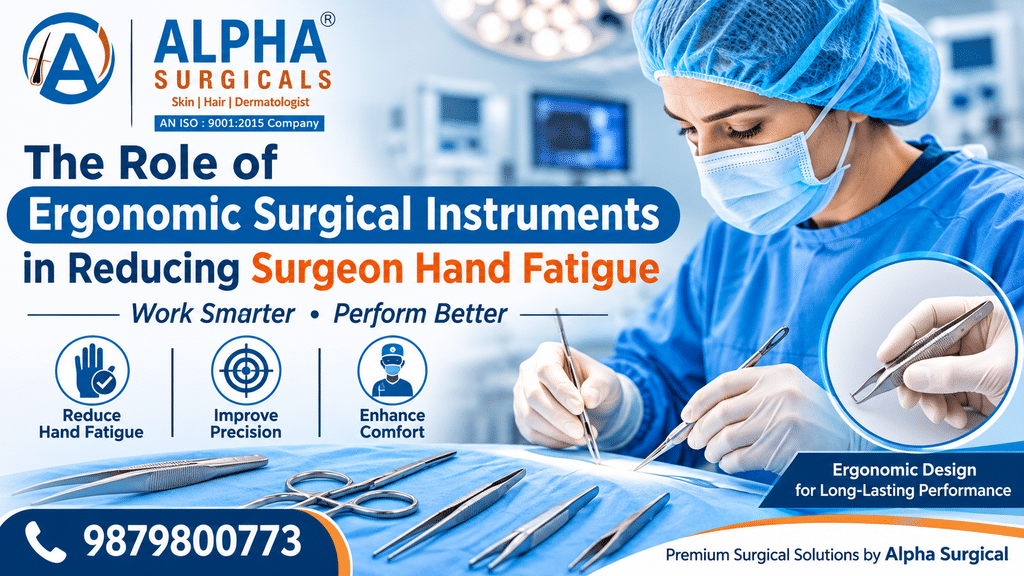
The Role of Ergonomic Surgical Instruments in Reducing Surgeon Hand Fatigue
Modern surgical procedures demand precision, concentration and consistent instrument control. However, surgeons often perform repetitive hand movements and maintain specific gripping positions for extended periods. These physical demands can contribute to hand fatigue, muscle strain and reduced comfort.
This is where ergonomic surgical instruments become important. Their thoughtful design focuses on grip comfort, balanced weight distribution, ease of handling and efficient movement. By supporting natural hand positioning, ergonomic instruments can help surgeons manage physical demands during procedures.
At Alpha Surgical, we understand the importance of dependable surgical instruments that meet the practical requirements of dermatology, aesthetic medicine and hair restoration professionals.
Let’s explore how ergonomic surgical instrument design supports surgeon comfort, handling and procedural efficiency.
What Are Ergonomic Surgical Instruments?
Ergonomic surgical instruments are medical tools designed to fit the natural movements and handling needs of the human hand. Their design considers how surgeons grip, hold, rotate and control instruments during clinical procedures.
Unlike instruments designed only around basic functionality, ergonomic instruments also consider user comfort and physical effort.
Common ergonomic design features include:
- Comfortable handles: Designed to support a secure and comfortable grip.
- Balanced weight: Helps distribute instrument weight more evenly.
- Appropriate handle diameter: Supports different hand sizes and gripping preferences.
- Smooth operation: Reduces unnecessary effort during repeated movements.
- Non-slip surfaces: Help maintain stable instrument control.
- Natural hand positioning: Encourages comfortable wrist and finger alignment.
These features can make a meaningful difference during procedures that require repetitive or sustained instrument handling.
Why Do Surgeons Experience Hand Fatigue?
Surgeon hand fatigue can develop through a combination of repetitive movements, sustained gripping and prolonged periods of focused work.
Several factors may contribute to physical discomfort.
1. Repetitive Hand Movements
Many surgical and dermatological procedures involve repeated gripping, cutting, holding and manipulating instruments. Over time, these movements can place additional demands on the small muscles of the hands and fingers.
2. Prolonged Instrument Grip
Holding an instrument in one position for an extended period may increase muscle tension, particularly when the handle does not provide a comfortable grip.
3. Poor Instrument Balance
An instrument with unsuitable weight distribution may require additional effort to maintain control. This can contribute to discomfort during extended use.
4. Inadequate Handle Design
Handles that are too narrow, too wide or difficult to grip may encourage excessive finger pressure. Consequently, surgeons may experience unnecessary strain.
5. Long Working Hours
Extended procedures and consecutive clinical sessions can increase physical demands, especially when surgeons have limited opportunities to change posture or rest their hands.
How Ergonomic Surgical Instruments Help Reduce Hand Fatigue
The main purpose of ergonomic design is to make instrument handling more comfortable and efficient.
Here are some important ways ergonomic surgical instruments can help.
1. Improved Grip Comfort
A comfortable handle allows surgeons to maintain a secure grip without applying unnecessary pressure.
Well-designed handles can support natural finger placement and reduce the need for excessive gripping force. As a result, surgeons may experience improved comfort during repetitive tasks.
2. Better Weight Distribution
Instrument balance plays an important role in handling.
A well-balanced surgical instrument can help reduce the effort required to maintain its position. This becomes particularly useful when performing delicate procedures that demand consistent control.
3. Reduced Finger and Wrist Strain
Ergonomic handles can encourage more natural hand and wrist positioning.
When an instrument supports comfortable positioning, surgeons may avoid some unnecessary movements and awkward gripping habits. However, instrument design alone cannot eliminate all physical strain.
4. Smoother Instrument Movement
Smooth instrument operation supports controlled movements.
For example, scissors, forceps and other precision instruments should operate consistently without requiring excessive pressure. Properly maintained joints and functional mechanisms also contribute to easier handling.
5. Improved Precision and Control
Comfort and precision often work together.
When surgeons can maintain a stable grip, they can focus more effectively on the task. Appropriate instrument weight, handle design and functional performance all contribute to controlled handling.
Important Ergonomic Features to Consider When Selecting Surgical Instruments
Choosing the right surgical instrument involves more than looking at its appearance or material. Professionals should also evaluate its practical handling characteristics.
Handle Design and Diameter
The handle should suit the user’s hand size and the intended procedure. A comfortable diameter can support secure gripping without excessive finger pressure.
Instrument Weight
Lightweight instruments may reduce the effort required for prolonged handling. However, extremely lightweight instruments are not automatically better. Proper balance and control remain essential.
Surface Texture
A suitable handle texture can improve grip stability, particularly when professionals wear surgical gloves.
Material and Finish
High-quality stainless steel is widely used in surgical instruments because of its durability, strength and suitability for appropriate cleaning and sterilization processes.
The finish should also support comfortable handling and easy maintenance.
Functional Performance
Scissors should cut smoothly, while forceps should provide appropriate alignment and gripping performance. Instrument joints should move consistently and should not feel unnecessarily stiff.
The Importance of Ergonomic Instruments in Dermatology and Hair Restoration
Ergonomics is particularly relevant in specialties where professionals perform detailed procedures using small instruments.
Dermatology Procedures
Dermatologists regularly use precision instruments such as:
- Skin biopsy punches
- Dermal forceps
- Surgical scissors
- Needle holders
- Curettes
These instruments require controlled handling and appropriate grip comfort, particularly during detailed procedures.
Hair Transplant Procedures
Hair restoration procedures involve repetitive instrument handling and delicate movements.
Common instruments include:
- FUE punches
- Hair transplant forceps
- Graft placement instruments
- Implantation tools
- Surgical scissors
An appropriately designed instrument can support comfortable handling during repetitive tasks. Its size, weight, grip and functional performance should match the procedure and the professional’s preferences.
Aesthetic Procedures
Aesthetic professionals frequently use fine instruments that require controlled movements and careful handling.
Ergonomic design can support comfortable instrument manipulation during procedures involving precision and repetitive movements.
Ergonomic Surgical Instruments vs Conventional Instrument Designs
Both conventional and ergonomically designed instruments can serve important clinical purposes. However, their design priorities may differ.
| Feature | Conventional Design | Ergonomic Design |
|---|---|---|
| Handle | Basic functional grip | Designed around hand comfort |
| Weight distribution | Depends on the instrument | Considers balance and handling |
| Grip | May offer limited grip features | Focuses on comfortable gripping |
| Hand positioning | Depends on individual handling | Aims to support natural positioning |
| User comfort | Varies by design | A key design consideration |
| Instrument control | Depends on construction and use | Designed to support controlled handling |
The best choice depends on the intended procedure, instrument quality and individual user requirements.
Practical Tips to Minimize Surgeon Hand Fatigue
Even the best ergonomic surgical instruments cannot replace good working habits.
Surgeons and clinical professionals can consider the following practices:
- Choose suitable instruments: Select instruments that match the procedure and hand size.
- Maintain a comfortable grip: Avoid applying more pressure than necessary.
- Adjust working posture: Maintain comfortable wrist, shoulder and elbow positions.
- Take appropriate breaks: Allow recovery between procedures whenever practical.
- Maintain instruments regularly: Check joints, alignment and cutting performance.
- Organize the workstation: Keep frequently used instruments within comfortable reach.
- Vary repetitive tasks when possible: Avoid maintaining the same hand position for unnecessarily long periods.
These measures can support better working conditions and help manage repetitive physical demands.
How Alpha Surgical Supports Professional Surgical Instrument Requirements
At Alpha Surgical, we recognize that surgical instruments are an essential part of everyday clinical practice.
Professionals need instruments that offer dependable functionality, suitable handling characteristics and consistent quality.
Alpha Surgical focuses on supplying professional medical and surgical products for dermatology, aesthetic medicine and hair restoration applications.
When selecting surgical instruments, professionals should consider:
- Comfortable and practical handle design.
- Appropriate instrument weight and balance.
- Reliable functional performance.
- Suitable materials and finishing.
- Consistent quality and maintenance requirements.
- Compatibility with the intended clinical application.
Whether professionals require dermatology instruments, hair transplant instruments or aesthetic surgical products, choosing appropriate tools can support an efficient clinical workflow.
Alpha Surgical aims to provide practical surgical solutions that meet the evolving requirements of medical professionals.
Conclusion
Ergonomic surgical instruments play an important role in supporting surgeon comfort and reducing unnecessary hand strain. Features such as comfortable handles, balanced weight, suitable grip surfaces and smooth instrument movement can make repetitive tasks easier to manage.
Although ergonomics alone cannot prevent every form of hand fatigue, selecting appropriate instruments and maintaining good working practices can contribute to a more comfortable clinical environment.
For professionals working in dermatology, aesthetic medicine and hair restoration, instrument design deserves careful consideration.
Choose quality. Prioritize comfort. Support precision with Alpha Surgical.
Frequently Asked Questions (FAQs)
1. What are ergonomic surgical instruments?
Ergonomic surgical instruments are medical tools designed to support comfortable gripping, natural hand positioning and controlled movements during surgical procedures.
2. How do ergonomic surgical instruments reduce hand fatigue?
They can help reduce unnecessary gripping effort through comfortable handles, suitable weight distribution, balanced construction and smooth operation.
3. Why is handle design important in surgical instruments?
Handle design influences grip comfort, finger positioning and instrument control. A suitable handle can help reduce excessive gripping pressure during repetitive tasks.
4. Are lightweight surgical instruments always better?
No. Lightweight instruments may reduce handling effort, but proper balance, stability and control are equally important. The ideal weight depends on the instrument and its intended application.
5. Which surgical instruments benefit from ergonomic design?
Forceps, scissors, needle holders, FUE punches, biopsy punches and graft implantation instruments can all benefit from thoughtful ergonomic design.
6. Can ergonomic instruments improve surgical precision?
They can support controlled handling and comfortable positioning. However, precision also depends on the surgeon’s training, technique, instrument quality and clinical conditions.
7. What should professionals consider when purchasing ergonomic surgical instruments?
Consider handle comfort, instrument weight, balance, grip texture, material quality, functional performance and suitability for the intended procedure.
8. Where can professionals find dermatology and hair transplant instruments?
Professionals can explore the surgical product range offered by Alpha Surgical for dermatology, aesthetic medicine and hair restoration applications.
Explore Professional Surgical Solutions with Alpha Surgical
Looking for reliable surgical instruments for dermatology, aesthetic medicine or hair restoration?
Connect with Alpha Surgical to explore professional surgical product solutions.
Contact Number: 9879800773
Website: https://alphasurgicals.com/
Instagram: https://www.instagram.com/alphasurgicals/
Explore Our Products: https://alphasurgicals.com/store/
Alpha Surgical – Skin | Hair | Dermatologist
Follow us on Instagram : https://www.instagram.com/alphasurgicals?igsh=cTdjYWNtaXkxazlr
Follow us on Facebook : https://www.facebook.com/alphasurgicals/
Watch and learn suturing techniques : https://alphasurgicals.com/educational-surgical-videos/
Visit our store to purchase other products : https://alphasurgicals.com/store/