
Beyond Traditional Subcision: How Instrument Design Influences Acne Scar Release
Acne scars can remain long after active acne clears, particularly when fibrous bands pull the skin downward and create depressions. For selected atrophic acne scars, dermatologists may recommend subcision to release these underlying attachments and improve skin texture.
However, successful scar treatment depends on more than the technique alone. Instrument design plays an important role in precision, tissue interaction, handling, and procedural control. Therefore, understanding the differences between subcision instruments helps dermatology professionals make informed choices for individual patients.
At Alpha Surgical, we understand the importance of quality, reliability, and practical design in professional dermatology instruments. In this article, we explore how modern subcision instrument design influences acne scar release and why choosing appropriate instruments matters.
Understanding Subcision and Acne Scar Release
Subcision is a minimally invasive dermatological procedure used to treat selected depressed acne scars. During the procedure, a qualified medical professional uses a suitable instrument to release fibrous bands beneath the skin that tether the scar to deeper tissue.
As these attachments loosen, the depressed area may become less noticeable. In addition, the healing process can promote changes in the underlying connective tissue.
Nevertheless, results vary according to scar type, scar depth, skin characteristics, instrument selection, and treatment technique. Consequently, dermatologists assess each patient’s needs before choosing an appropriate approach.
Beyond Traditional Subcision: Why Instrument Design Matters
Traditional subcision techniques established an important approach to treating tethered acne scars. However, instrument development has expanded the options available to dermatology professionals.
Today, clinicians can choose from different needles, cannulas, wire-based devices, and specialized blunt-blade instruments. Each design offers distinct characteristics, and the most appropriate option depends on the clinical indication.
Moreover, instrument design can influence how effectively a clinician navigates the treatment area, controls movement, and interacts with fibrous tissue. Although no single instrument suits every scar, thoughtful selection can support a more controlled treatment approach.
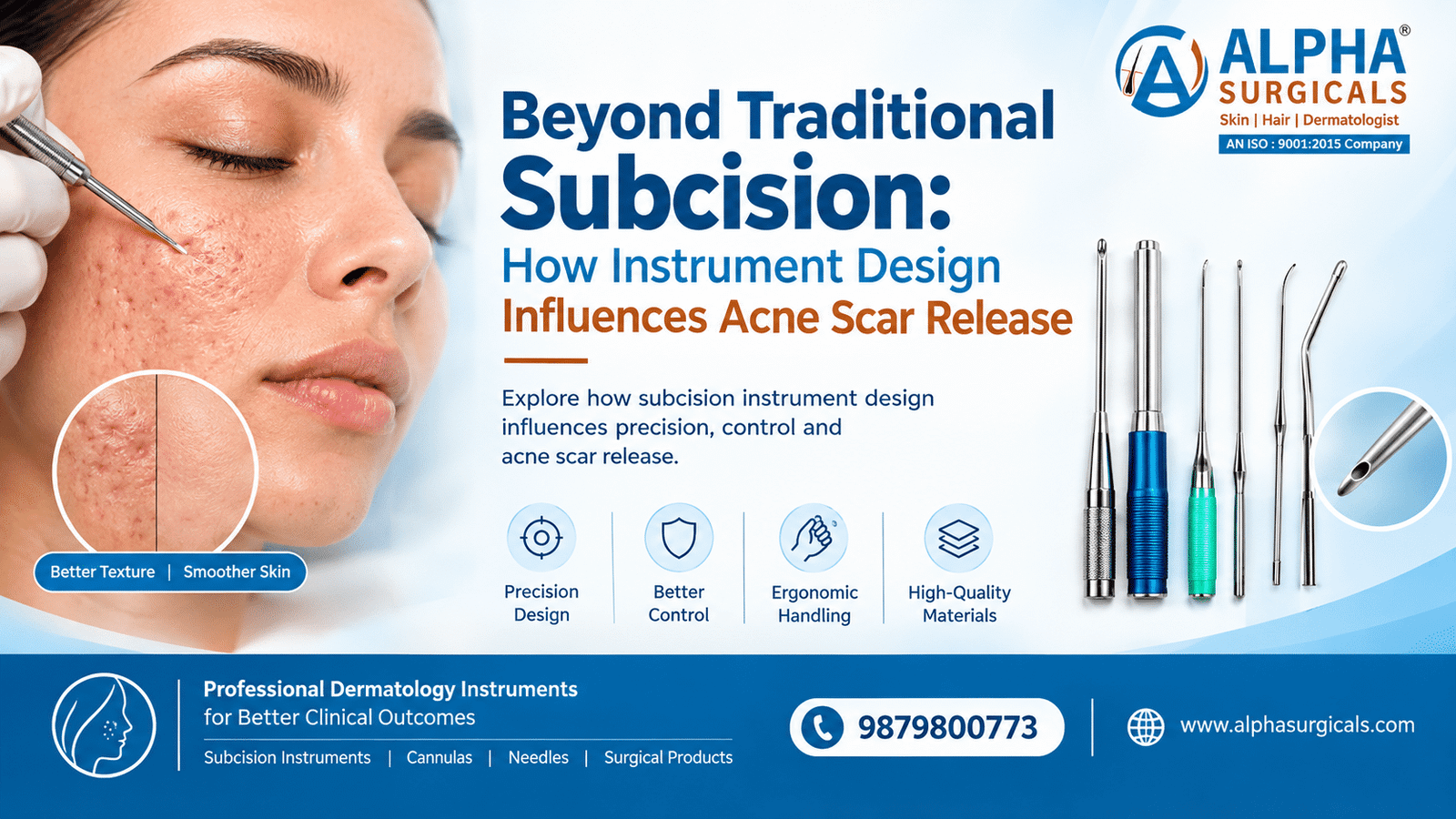
1. Tip Design and Precision
The tip represents one of the most important features of a subcision instrument. Its geometry influences how the instrument interacts with tissue and how the clinician directs movement beneath the skin.
For example, sharp needles and blunt cannulas have different tissue-interaction characteristics. Specialized instruments may also support particular approaches to releasing fibrous attachments.
Therefore, dermatologists should evaluate tip design alongside the intended application, scar characteristics, and clinical requirements. An appropriate design can support precise instrument handling; however, the clinician’s training and technique remain essential.
2. Instrument Shape and Maneuverability
Instrument shape influences how easily a clinician can guide a device through the intended treatment area. Length, curvature, shaft profile, and overall geometry may affect maneuverability and access.
Furthermore, an instrument that suits the treatment area can help the clinician maintain better directional control. The ideal design depends on the location and extent of scarring, the selected technique, and the professional’s clinical judgment.
For this reason, dermatology professionals should consider the complete instrument design rather than focusing on one feature alone.
3. Flexibility and Structural Strength
Flexibility and strength serve different but equally important purposes. Appropriate flexibility may support navigation through selected tissue planes, while sufficient structural strength helps an instrument maintain its intended performance during use.
However, excessive flexibility may reduce directional control, while unsuitable rigidity may limit maneuverability for certain applications.
Consequently, manufacturers and healthcare professionals must consider the intended clinical use when evaluating these properties. A suitable balance supports reliable handling without implying that one level of flexibility works for every procedure.
4. Handle Design and Ergonomics
A well-designed handle can improve grip, comfort, and control. These features matter during delicate procedures because clinicians need to guide instruments carefully and maintain consistent handling.
For instance, handle diameter, surface texture, balance, and overall ergonomics can influence the user’s experience. Additionally, comfortable handling may help reduce unnecessary hand strain during demanding clinical work.
At Alpha Surgical, instrument quality means considering practical clinical requirements alongside material and manufacturing standards. Ergonomic design is one factor professionals can evaluate when selecting instruments for dermatology applications.
5. Material Quality and Manufacturing Standards
Material selection influences durability, corrosion resistance, cleaning compatibility, and long-term instrument performance. Therefore, healthcare professionals should evaluate the material specifications and manufacturing quality of any instrument they purchase.
High-quality materials alone do not establish clinical suitability. Instead, professionals should also verify the device’s intended use, applicable regulatory requirements, and manufacturer guidance.
Moreover, proper cleaning, sterilization, inspection, and maintenance remain essential whenever the instrument’s instructions require them. These measures help support appropriate instrument handling and infection-prevention practices.
6. Choosing Between Needles, Cannulas, and Specialized Instruments
Different subcision instruments offer different advantages. Accordingly, clinicians should select an instrument according to the patient’s scar characteristics and the intended treatment approach.
- Subcision needles: These instruments support needle-based techniques and offer specific characteristics for releasing fibrous attachments.
- Subcision cannulas: Depending on their design, cannulas can provide a different approach to navigating tissue and treating tethered scars.
- Specialized blunt-blade instruments: These devices support particular approaches to releasing fibrous attachments in selected cases.
- Other specialized designs: Certain instruments address specific clinical requirements and may suit particular treatment techniques.
Research has examined several instrument categories, including needles, cannulas, wires, and blunt-blade devices. However, clinical outcomes vary, and evidence does not establish one universal instrument as the best choice for every patient.
Therefore, dermatologists should weigh the available evidence, patient-specific factors, and their professional experience when choosing a technique.
How Instrument Design Can Influence Clinical Outcomes
Instrument design can affect handling and tissue interaction, but it does not independently determine treatment success.
Several factors work together:
- Precision: Appropriate instrument geometry can support controlled movement.
- Maneuverability: Suitable length and shape can help clinicians navigate the intended treatment area.
- Handling: Ergonomic features can support grip and control.
- Consistency: Reliable manufacturing and appropriate maintenance can help preserve instrument performance.
- Patient-specific selection: Matching the instrument to the clinical indication supports a considered treatment approach.
Nevertheless, subcision carries potential risks, including bruising, swelling, discomfort, infection, pigment changes, and scar-related complications. Clinician training, patient assessment, treatment technique, and aftercare all contribute to the overall outcome.
The Role of Alpha Surgical in Dermatology Instrument Selection
At Alpha Surgical, we supply professional medical and surgical products for dermatology, aesthetic medicine, hair restoration, and related healthcare applications.
We recognize that dermatology professionals need instruments that meet practical clinical requirements. Therefore, product selection should consider quality, reliability, appropriate design, and the intended application.
When evaluating subcision instruments, professionals should review relevant product specifications, material information, handling characteristics, and compatibility with their clinical protocols.
Alpha Surgical aims to support healthcare professionals by providing access to dermatology and surgical products suited to their professional requirements. Our focus remains on quality and reliability rather than claims of guaranteed clinical results.
Explore our range of professional products at https://alphasurgicals.com/store/.
What Should Professionals Consider When Selecting Subcision Instruments?
Before selecting an instrument, dermatology professionals should consider the following questions:
- Does the instrument suit the scar type and intended clinical technique?
- Does its tip and overall geometry support the required level of control?
- Are its material specifications and manufacturing quality clearly documented?
- Does the handle provide appropriate grip and handling comfort?
- Can the instrument be processed, maintained, and inspected according to the manufacturer’s instructions?
- Does the product meet the applicable regulatory and clinical requirements?
By reviewing these factors, professionals can make more informed decisions about their instrument choices.
Frequently Asked Questions
What is subcision for acne scars?
Subcision is a minimally invasive procedure that releases fibrous attachments beneath selected depressed acne scars. A qualified medical professional determines whether the procedure suits the patient’s scar type and treatment goals.
Why does instrument design matter in subcision?
Instrument design influences handling, maneuverability, and tissue interaction. However, the clinician’s expertise, patient assessment, and treatment technique also play important roles in the outcome.
Are subcision needles and cannulas the same?
No. Needles and cannulas differ in their design and tissue-interaction characteristics. Clinicians select between them according to the clinical indication, the available evidence, and their experience.
Does a better-designed instrument guarantee better acne scar results?
No. Instrument design can support appropriate handling and control, but it cannot guarantee a particular result. Outcomes depend on several factors, including scar characteristics, clinician expertise, and the chosen treatment approach.
How can professionals choose suitable dermatology instruments?
Professionals should assess the intended application, design specifications, material quality, handling characteristics, manufacturer instructions, and applicable regulatory requirements before selecting an instrument.
Conclusion: Beyond Traditional Subcision
Acne scar treatment continues to evolve as clinicians evaluate different techniques and instrument designs. From tip geometry and maneuverability to ergonomics and material quality, each feature can influence how an instrument performs in its intended application.
Ultimately, Beyond Traditional Subcision means looking beyond the technique itself and recognizing the role of thoughtful instrument selection. By combining appropriate instruments with clinical expertise and patient-specific assessment, dermatology professionals can make informed decisions about acne scar management.
At Alpha Surgical, we remain committed to supplying professional medical and surgical products that address the practical needs of dermatology, aesthetic medicine, and hair restoration professionals.
Contact Alpha Surgical to learn more about our product range.
Website: https://alphasurgicals.com/
Phone: 9879800773
Medical disclaimer: This article provides general educational information for healthcare professionals. It does not replace clinical training, professional judgment, patient assessment, or manufacturer instructions.