
Hair restoration procedures require precision, careful graft handling, and suitable surgical instruments. Among the tools used during modern hair transplantation, a Hair Transplant Implanter helps clinicians place follicular unit grafts into prepared recipient sites with controlled positioning.
The right implanter can support accurate graft placement while helping the practitioner manage the direction, angle, and depth of implantation. Therefore, understanding the design, types, uses, and handling of an implanter can help hair-restoration professionals select appropriate instruments for their procedures.
Alpha Surgical supplies professional surgical and hair-transplant instruments designed to support practical clinical requirements. Its product range includes hair transplant instruments and other solutions used by healthcare professionals.
What Is a Hair Transplant Implanter?
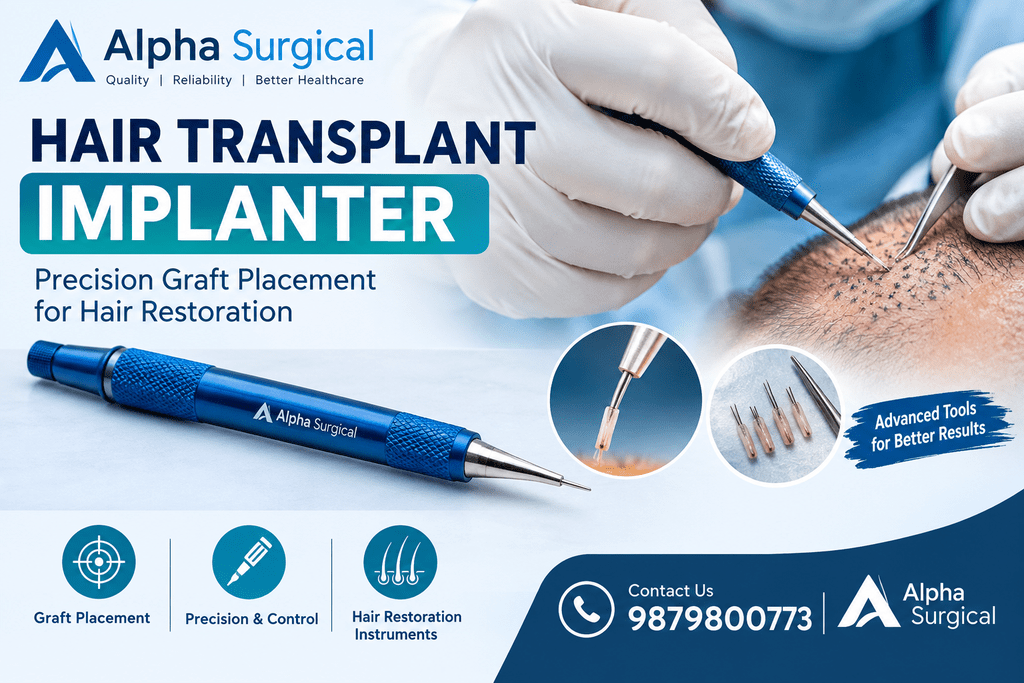
A Hair Transplant Implanter is a specialized implantation instrument used to place follicular unit grafts into the recipient area during a hair restoration procedure.
The device typically features a pen-like body and a fine hollow needle or loading channel. The practitioner loads a prepared graft into the implanter and then positions the graft at the selected recipient site.
Unlike conventional forceps placement, the implanter allows the practitioner to combine graft placement and insertion through a controlled instrument. As a result, it can provide convenient handling during procedures that use an implantation-based technique.
The exact design varies according to the procedure, graft characteristics, needle size, and practitioner preference.
How Does a Hair Transplant Implanter Work?
A typical implantation process involves several important steps.
1. Graft Preparation
First, the surgical team prepares the follicular unit grafts after extraction. The team handles each graft carefully to minimize unnecessary manipulation.
2. Graft Loading
Next, the practitioner loads the prepared graft into the implanter. Proper loading helps maintain graft orientation and supports controlled placement.
3. Recipient Site Positioning
The practitioner then positions the implanter at the selected recipient area. The angle and direction should follow the planned hair-growth pattern.
4. Graft Placement
Finally, the practitioner activates or advances the implanter mechanism to place the graft. The practitioner controls the insertion according to the planned depth and direction.
Because every patient’s hair characteristics differ, the technique and instrument selection should be determined by a qualified hair-restoration professional.
Types of Hair Transplant Implanters
Different implantation systems are available for hair restoration procedures. The appropriate option depends on the technique, graft size, and clinical requirements.
Sharp Needle Implanter
A sharp needle implanter has a pointed tip that can assist with direct implantation techniques. Practitioners may use different needle diameters depending on graft size and the desired implantation approach.
Blunt Needle Implanter
A blunt needle design provides a different approach to graft placement. The selection depends on the procedure and the practitioner’s preferred technique.
Choi-Type Implanter
The Choi-type implanter is commonly associated with direct hair implantation techniques. It generally uses a hollow needle through which the graft is loaded before placement.
The practitioner can select the needle size according to the characteristics of the graft and recipient area.
Manual Implanter Pen
A manual implanter pen gives the practitioner direct control over graft loading and placement. Its simple design can make it practical for procedures that require controlled implantation.
Key Features of a Hair Transplant Implanter
When selecting an implanter, professionals should consider several design and performance factors.
1. Needle Size
Needle diameter matters because graft dimensions can vary. The selected needle should accommodate the graft appropriately while supporting the planned implantation technique.
2. Graft Compatibility
The instrument should work effectively with the type and size of follicular grafts used during the procedure.
3. Handling and Ergonomics
A comfortable instrument can support controlled handling during lengthy procedures. Therefore, practitioners should consider the grip, weight, balance, and overall design.
4. Precision
Controlled graft placement remains an important consideration in hair transplantation. A suitable implanter should allow the practitioner to position grafts according to the planned hair direction and angle.
5. Reusability or Disposable Design
Some implantation instruments are designed for repeated clinical use after appropriate processing, while others are supplied for single-use applications. Healthcare professionals should always follow the manufacturer’s instructions for cleaning, sterilization, and usage.
Benefits of Using a Hair Transplant Implanter
A properly selected implanter can offer several practical advantages during hair restoration procedures.
Controlled Graft Placement
The instrument helps the practitioner place grafts in a controlled manner. This control can support consistent positioning throughout the recipient area.
Convenient Graft Handling
The implanter provides a dedicated channel or needle for graft placement. Consequently, it can simplify the handling process during implantation-based techniques.
Control Over Direction and Angle
Hair naturally grows in different directions across different areas of the scalp. The practitioner can use the implantation instrument to help follow the planned direction and angle.
Efficient Workflow
An appropriate implanter can support a streamlined implantation workflow. However, the overall efficiency depends on the procedure, practitioner experience, graft preparation, and clinical setup.
Reduced Direct Handling
Because the graft travels through the instrument during implantation, the practitioner may reduce unnecessary direct handling of the graft. Proper technique remains essential because graft survival depends on multiple factors.
Hair Transplant Implanter vs. Forceps
Both implanters and forceps can play a role in hair restoration procedures, but they serve different purposes.
| Feature | Hair Transplant Implanter | Forceps |
|---|---|---|
| Main use | Graft implantation | Graft handling and placement |
| Graft handling | Uses a needle/channel | Uses tweezer-like tips |
| Placement control | Supports controlled insertion | Requires direct placement |
| Technique | Commonly used with implantation techniques | Used across several transplantation techniques |
| Handling method | Graft is loaded into the instrument | Graft is held directly |
The choice between these instruments depends on the transplantation method and the practitioner’s technique.
Factors to Consider When Choosing an Implanter
Selecting the right instrument requires more than simply choosing a particular design. Consider the following factors before purchasing.
Graft Size
Choose an appropriate needle size based on the graft characteristics. An unsuitable size may make graft loading or placement more difficult.
Procedure Type
Different transplantation approaches may require different instruments. Therefore, match the implanter to the intended clinical technique.
Needle Quality
A properly manufactured needle should provide consistent performance. The tip design, sharpness, strength, and overall construction can influence handling.
Instrument Quality
High-quality surgical instruments can provide dependable performance and better handling during clinical procedures. Always consider the manufacturer’s specifications and intended use.
Sterilization Requirements
For reusable instruments, follow the manufacturer’s recommended cleaning and sterilization procedures. Proper processing helps maintain clinical safety and instrument performance.
Practitioner Preference
Experienced practitioners often develop preferences based on their technique and workflow. Consequently, ergonomics and handling should also influence the final selection.
Why Instrument Quality Matters in Hair Transplantation
Hair transplantation involves delicate follicular grafts. Therefore, every instrument used during the procedure should support careful handling.
A well-designed implantation instrument can help practitioners maintain a consistent workflow. In addition, appropriate construction and needle quality can support precise graft placement.
However, the instrument alone does not determine the outcome. Graft quality, extraction technique, storage, recipient-site preparation, implantation technique, and practitioner expertise all contribute to the overall procedure.
Hair Transplant Instruments from Alpha Surgical
Alpha Surgical provides professional hair transplant instruments and surgical products for healthcare professionals.
The company focuses on supplying products that address practical clinical requirements across areas such as hair restoration, dermatology, aesthetics, and surgical procedures.
For hair-restoration professionals, selecting the appropriate instruments can help create an organized and controlled procedural workflow. Alpha Surgical’s range of hair transplant instruments is designed to support these professional requirements.
When selecting a Hair Transplant Implanter, professionals should consider the instrument’s design, needle specifications, graft compatibility, handling characteristics, and intended procedure.
How to Maintain Hair Transplant Implanter
Proper maintenance plays an important role when reusable instruments are used.
Follow the manufacturer’s instructions for:
- Cleaning the instrument after use
- Removing biological material promptly
- Inspecting the needle and instrument components
- Performing appropriate sterilization
- Storing the instrument in suitable conditions
- Checking the instrument before the next procedure
Never reuse a product beyond its intended use. Always follow applicable clinical protocols and manufacturer recommendations.
Frequently Asked Questions
What is a Hair Transplant Implanter?
A Hair Transplant Implanter is a specialized instrument used to place follicular unit grafts into the recipient area during hair restoration procedures.
What is an implanter pen used for?
An implanter pen helps practitioners load and place follicular grafts into the recipient area. It can provide controlled placement during implantation-based hair transplantation techniques.
What needle size is used for hair transplantation?
Needle size varies according to graft characteristics, implantation technique, and the practitioner’s requirements. Therefore, professionals should select an appropriate size based on the intended application.
Is an implanter better than forceps?
Implanters and forceps serve different functions. An implanter supports controlled graft insertion, while forceps allow direct graft handling and placement. The appropriate instrument depends on the procedure and practitioner technique.
How should a hair transplant implanter be cleaned?
Reusable instruments should be cleaned and sterilized according to the manufacturer’s instructions and applicable clinical protocols. Single-use products should not be reused.
Where can I find hair transplant instruments?
Alpha Surgical supplies professional hair transplant instruments and surgical products for healthcare applications. Professionals can select instruments according to their procedure requirements and product specifications.
Conclusion
A Hair Transplant Implanter is an important instrument for controlled follicular graft placement in implantation-based hair restoration procedures. Its design can support graft handling, positioning, and insertion while helping practitioners follow the planned direction and angle of the hair.
However, choosing the right instrument requires careful consideration of graft size, needle specifications, procedure type, ergonomics, instrument quality, and intended use.
For professional hair restoration and surgical requirements, Alpha Surgical offers a range of hair transplant instruments and related surgical products designed around practical clinical needs.
Follow us on Instagram : https://www.instagram.com/alphasurgicals?igsh=cTdjYWNtaXkxazlr
Follow us on Facebook : https://www.facebook.com/alphasurgicals/
Watch and learn suturing techniques : https://alphasurgicals.com/educational-surgical-videos/
Visit our store to purchase other products : https://alphasurgicals.com/store/