Introduction
Dermatology continues to evolve with advancements in technology, surgical techniques and medical instruments. Today, minimally invasive dermatologic surgery is becoming an important part of modern clinical practice. Dermatologists increasingly focus on precision, controlled tissue interaction, patient comfort and efficient recovery.
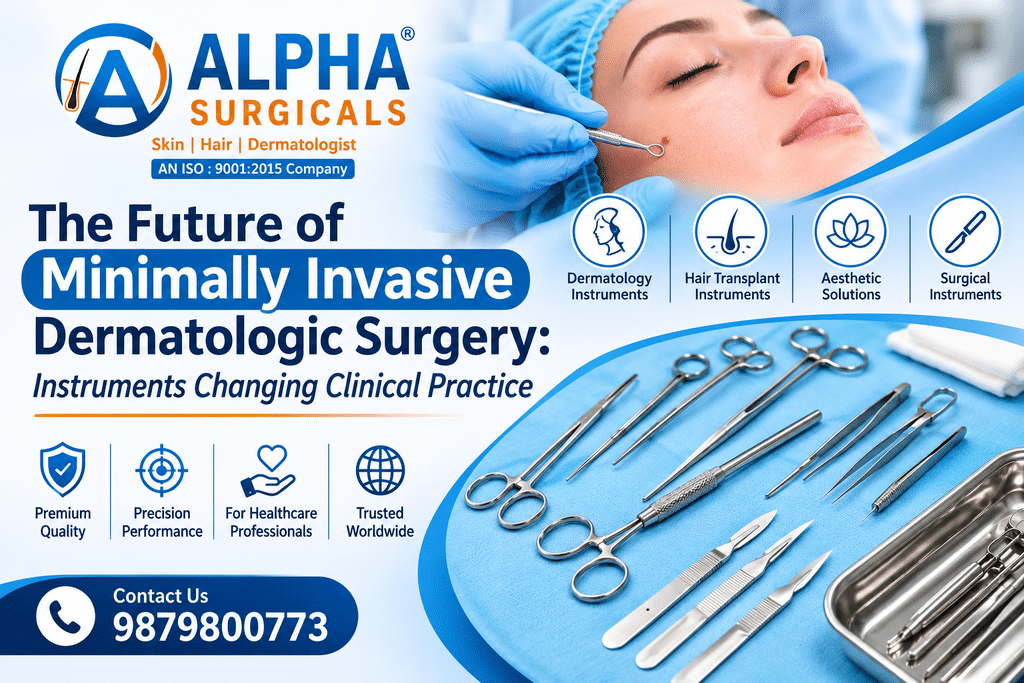
Modern surgical instruments play a significant role in this transformation. From precision biopsy punches to advanced forceps, curettes and specialized surgical tools, instrument design directly influences the way dermatologists perform various procedures.
At Alpha Surgical, we understand the importance of reliable, high-quality surgical instruments in modern dermatology. Our focus is on providing practical instrument solutions that support clinical requirements, precision and professional performance.
Let’s explore how modern instruments are shaping the future of minimally invasive dermatologic surgery.
1. What Is Minimally Invasive Dermatologic Surgery?
Minimally invasive dermatologic surgery refers to procedures designed to address specific skin conditions while limiting unnecessary tissue disruption.
These procedures may involve small incisions, specialized instruments or targeted treatment approaches. Depending on the clinical requirement, dermatologists may use different instruments to support controlled and precise interventions.
Common applications include:
- Skin biopsy and diagnostic procedures
- Acne scar treatment
- Minor skin lesion removal
- Hair restoration procedures
- Dermatologic tissue management
- Selected aesthetic treatments
As clinical expectations evolve, instrument quality and design become increasingly important.
2. The Growing Importance of Precision Surgical Instruments
Precision is one of the most important considerations in dermatologic surgery. Small treatment areas often require careful handling and controlled instrument movement.
Modern instruments help clinicians maintain better control during procedures.
Important instrument characteristics include:
Fine Instrument Tips: Specialized tips support accurate handling in small treatment areas.
Ergonomic Design: Comfortable handles help clinicians maintain control during extended procedures.
Material Quality: Suitable medical-grade materials support durability and repeated sterilization according to manufacturer guidelines.
Consistent Performance: Reliable instrument construction helps maintain predictable handling characteristics.
Therefore, choosing appropriate instruments is an essential part of a well-organized dermatologic practice.
3. Modern Instruments Transforming Dermatologic Practice
Several categories of surgical instruments contribute to the development of minimally invasive dermatologic surgery.
A. Dermatology Biopsy Punches
Biopsy punches support tissue sampling for diagnostic purposes. They are available in different sizes to meet specific clinical requirements.
Their design helps clinicians obtain controlled tissue samples when appropriate.
B. Precision Surgical Forceps
Surgical forceps support controlled tissue handling during dermatologic procedures.
Different tip designs and handle configurations provide options for various clinical applications. Reliable grip and alignment are important considerations when selecting these instruments.
C. Dermatology Curettes
Dermatology curettes are used in selected skin procedures where controlled tissue removal is clinically indicated.
Their shape, size and construction influence handling and suitability for different applications.
D. Fine Surgical Scissors
Fine surgical scissors support precise cutting and tissue management in dermatologic practice.
Different blade shapes and sizes allow clinicians to select instruments according to their procedural requirements.
E. Specialized Cannulas and Needles
Specialized cannulas and needles support selected aesthetic and dermatologic applications.
Their dimensions, material quality and compatibility with associated equipment are important factors in instrument selection.
F. Hair Transplant Instruments
Modern hair restoration procedures also benefit from specialized surgical instruments.
FUE punches, implanter pens, graft handling instruments and other hair transplant tools support different stages of hair restoration workflows.
4. How Instrument Design Is Changing Clinical Practice
Instrument innovation involves more than introducing new products. It also focuses on improving the practical features that clinicians use every day.
Here are some important developments.
1. Improved Ergonomics
Instrument handles and grip designs influence comfort and control. Ergonomic features can help reduce unnecessary hand strain during repetitive clinical tasks.
2. Greater Precision
Well-designed instrument tips and balanced construction support controlled handling in smaller treatment areas.
3. Better Material Selection
Medical-grade stainless steel and other suitable materials offer important characteristics such as durability, corrosion resistance and compatibility with validated reprocessing methods.
4. Application-Specific Designs
Modern dermatology requires instruments for different procedures. Therefore, specialized designs help clinicians select tools according to their intended applications.
5. Improved Equipment Compatibility
Connections and fittings must match their intended equipment and manufacturer specifications. Proper compatibility helps support reliable clinical workflows.
5. The Role of Technology in Minimally Invasive Dermatologic Surgery
Technology continues to influence the development of dermatologic instruments and clinical equipment.
Several developments are particularly important:
- Advanced manufacturing: Improved manufacturing processes support consistent instrument dimensions and finishing.
- Precision engineering: Carefully designed components support accurate instrument handling.
- Modern energy-based devices: Selected technologies support specific dermatologic applications under appropriate clinical protocols.
- Digital integration: Imaging and documentation technologies help clinicians assess treatment areas and maintain clinical records.
- Specialized instrument systems: Application-specific products help organize different stages of clinical procedures.
However, technology alone does not determine clinical outcomes. Appropriate patient selection, practitioner expertise, clinical judgment and instrument quality remain essential.
6. Why Choosing the Right Surgical Instruments Matters
The right instrument supports the clinician’s intended application and contributes to an organized working environment.
Before selecting dermatologic surgical instruments, professionals should consider:
- Intended clinical application
- Instrument dimensions and tip design
- Material quality and construction
- Handle comfort and ergonomics
- Sterilization and maintenance requirements
- Compatibility with associated equipment
- Manufacturer specifications and product quality
Furthermore, selecting instruments from a reliable supplier helps clinics maintain consistency in their equipment requirements.
7. Alpha Surgical: Supporting the Future of Dermatologic Surgery
At Alpha Surgical, we recognize that modern dermatology requires instruments that combine precision, reliability and practical design.
We focus on supplying professional medical and surgical products for dermatology, aesthetic medicine, hair restoration and related healthcare applications.
Our product range supports the evolving requirements of clinical professionals, including:
- Dermatology surgical instruments
- Hair transplant instruments
- FUE punches and accessories
- PRP-related products
- Aesthetic treatment instruments
- Specialized surgical tools and consumables
We understand that every clinical application has different requirements. Therefore, instrument selection should always consider the intended procedure, product specifications and professional recommendations.
Alpha Surgical is committed to supporting healthcare professionals with quality-focused instrument solutions for modern clinical practice.
8. What Does the Future Hold?
The future of minimally invasive dermatologic surgery will likely involve continued improvements in instrument engineering, ergonomics, material science and technology integration.
Several trends may influence future clinical practice:
- More specialized and application-specific instruments
- Greater emphasis on ergonomic instrument design
- Improved manufacturing consistency
- Better integration between instruments and clinical equipment
- Continued development of precision-based treatment technologies
- Increased attention to instrument safety, maintenance and quality standards
As these developments continue, dermatologists will have more options when selecting instruments for their clinical requirements.
Conclusion
The evolution of minimally invasive dermatologic surgery reflects the growing importance of precision, technology and specialized surgical instruments in modern dermatology.
From biopsy punches and precision forceps to specialized cannulas and hair transplant instruments, every instrument serves a specific purpose in clinical practice.
Ultimately, successful clinical workflows depend on the right combination of practitioner expertise, appropriate technology and reliable instruments.
Alpha Surgical remains focused on supporting dermatology, aesthetic medicine and hair restoration professionals with practical, quality-focused surgical instrument solutions.
Explore our range of professional surgical products and discover how the right instruments can support modern clinical practice.
Frequently Asked Questions (FAQs)
1. What is minimally invasive dermatologic surgery?
Minimally invasive dermatologic surgery involves procedures designed to address skin conditions while limiting unnecessary tissue disruption through appropriate techniques and specialized instruments.
2. Which instruments are commonly used in dermatologic surgery?
Common instruments include biopsy punches, surgical forceps, curettes, fine scissors, needles, cannulas and specialized surgical tools.
3. Why is instrument precision important in dermatology?
Precision supports controlled handling, accurate tissue interaction and appropriate performance during dermatologic procedures.
4. How do ergonomic surgical instruments help dermatologists?
Ergonomic instruments are designed to improve grip and handling comfort. They may also help reduce unnecessary hand strain during repetitive clinical tasks.
5. What materials are commonly used in dermatologic surgical instruments?
Medical-grade stainless steel is commonly used because of its durability, corrosion resistance and suitability for appropriate cleaning and sterilization processes.
6. How is technology influencing dermatologic surgery?
Advancements in manufacturing, instrument engineering, imaging and specialized clinical equipment are contributing to the development of modern dermatologic practice.
7. Where can professionals find dermatology surgical instruments?
Healthcare professionals can explore specialized medical instrument suppliers such as Alpha Surgical for dermatology, aesthetic medicine and hair restoration products.
Call to Action
Looking for Reliable Dermatology Surgical Instruments?
Choose quality-focused instrument solutions with Alpha Surgical.
Alpha Surgical – Supporting Precision, Quality and Innovation in Modern Surgical Practice.
Follow us on Instagram : https://www.instagram.com/alphasurgicals?igsh=cTdjYWNtaXkxazlr
Follow us on Facebook : https://www.facebook.com/alphasurgicals/
Watch and learn suturing techniques : https://alphasurgicals.com/educational-surgical-videos/
Visit our store to purchase other products : https://alphasurgicals.com/store/