
Modern dermatology and aesthetic medicine use different techniques to support skin treatment and product delivery. Two commonly discussed approaches are microneedling and intradermal injection. Although both involve the skin’s outer layers, they work in different ways and serve different clinical purposes.
Understanding Microneedling vs Intradermal Injection helps explain how each technique interacts with the skin, how professionals select an appropriate approach and why specialized instruments matter.
For dermatology and aesthetic professionals, choosing suitable equipment is an important part of clinical preparation. Alpha Surgical supplies professional instruments and products for dermatology, aesthetic medicine and related applications.
What Is Microneedling?
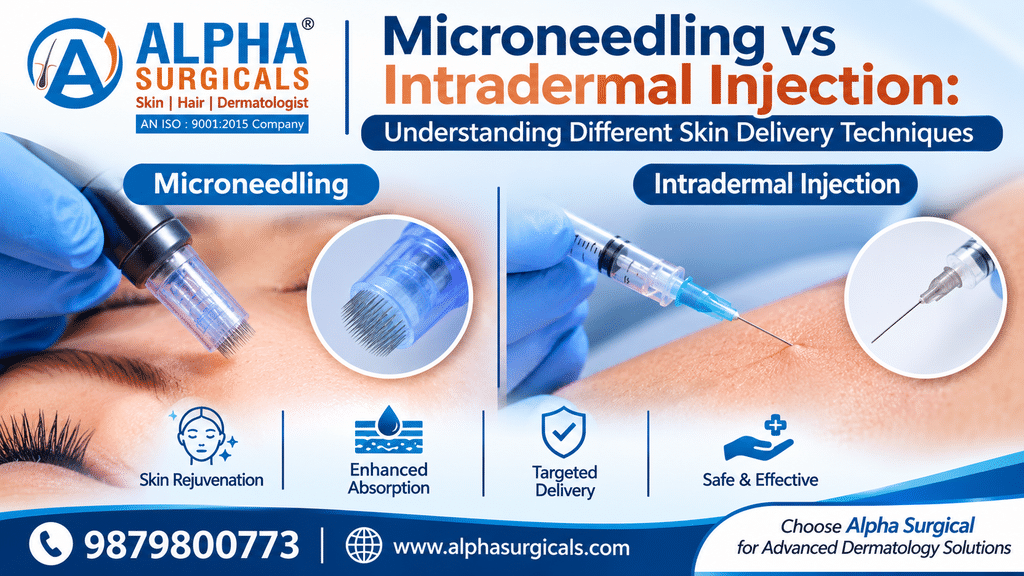
Microneedling is a dermatological technique that uses a device with fine needles to create controlled microchannels in the skin.
These microchannels trigger a natural skin-repair response. Depending on the device and clinical application, professionals may use microneedling to address concerns such as skin texture, certain types of acne scarring and the appearance of fine lines.
Microneedling is also discussed in the context of topical product application. However, the degree of product penetration varies. Not every topical product is suitable for application to skin that has undergone microneedling.
How Microneedling Works
Microneedling creates controlled micro-injuries that activate the skin’s natural repair processes.
The technique may support changes in skin texture and appearance over time. Results vary according to individual skin characteristics, treatment selection and professional assessment.
Common Applications
Professionals may consider microneedling for:
- Certain types of acne scarring
- Uneven skin texture
- The appearance of fine lines
- Selected skin rejuvenation applications
- Other concerns based on individual clinical assessment
The suitability of microneedling depends on the person’s skin condition and professional evaluation.
What Is Intradermal Injection?
Intradermal injection is a method of delivering a suitable substance directly into the dermis, the layer of skin beneath the epidermis.
Unlike microneedling, which creates multiple controlled microchannels, intradermal injection uses an injection to place a specific substance within the skin.
Qualified healthcare professionals select this method according to the intended treatment, product characteristics and clinical requirements.
How Intradermal Injection Works
In this technique, a trained professional uses an appropriate sterile injection device to deliver a suitable product into the dermal layer.
The product, intended purpose and clinical protocol determine whether this method is appropriate.
Intradermal injections are used in selected medical and dermatological applications. Their use depends on the substance being administered and its approved indications.
Common Considerations
Professionals assess:
- The intended clinical application
- The suitability of the substance
- Product-specific requirements
- Patient-specific factors
- Safety, sterility and applicable clinical protocols
Not every skin product is suitable for intradermal injection.
Microneedling vs Intradermal Injection: Key Differences
Although both techniques involve the skin, their mechanisms and purposes differ.
| Feature | Microneedling | Intradermal Injection |
|---|---|---|
| Main approach | Creates controlled microchannels | Delivers a suitable substance directly into the dermis |
| Primary purpose | Supports skin-remodelling processes | Provides targeted delivery of an appropriate substance |
| Instrument | Microneedling device | Suitable sterile injection device |
| Skin interaction | Multiple controlled microchannels | Direct placement within the dermal layer |
| Product delivery | Topical application may be considered in selected protocols | A specific substance is delivered by injection |
| Professional considerations | Device suitability, skin assessment and hygiene | Product suitability, injection safety and clinical assessment |
The two methods are not interchangeable. Professionals select the technique according to the treatment objective and individual clinical requirements.
1. Differences in Skin Interaction
One of the main differences between these techniques is how they interact with the skin.
Microneedling
Microneedling creates controlled microchannels across the selected treatment area. The process activates the skin’s natural repair response.
Intradermal Injection
Intradermal injection delivers a suitable substance directly into the dermis. Its purpose depends on the specific product and clinical indication.
Therefore, the difference is not simply the instrument. It is also the intended biological and clinical function.
2. Differences in Product Delivery
Product delivery is another important distinction.
Microneedling may be discussed alongside topical skincare applications. However, microchannels do not guarantee predictable absorption, and products must be specifically appropriate for the intended use.
In contrast, intradermal injection places a selected substance directly into the dermal layer. This requires an appropriate product, sterile equipment and qualified professional administration.
Professionals should never assume that a product designed for topical use is suitable for injection.
3. Instrument Selection and Quality
Both techniques require suitable instruments and attention to product quality.
Microneedling Devices
When evaluating a microneedling device, professionals may consider:
- Device design and handling
- Compatible needle cartridges or components
- Product specifications
- Sterility and single-use requirements, where applicable
- Manufacturer instructions and maintenance guidance
Intradermal Injection Instruments
For injection-related applications, important considerations include:
- Appropriate sterile injection equipment
- Product and device compatibility
- Reliable product specifications
- Safe handling and disposal requirements
- Compliance with applicable clinical protocols
Instrument selection should always match the intended clinical application.
4. Safety and Professional Considerations
Both methods require appropriate training, hygiene and patient assessment.
Microneedling may cause temporary redness, sensitivity and irritation. Inappropriate use can increase the risk of complications, including infection or skin injury.
Intradermal injection also carries risks, which may include local reactions, infection and product-specific complications.
Therefore, trained professionals should assess the individual, select suitable products and follow established safety protocols.
Neither technique is appropriate for every person or every skin concern.
5. How Professionals Choose Between the Two Techniques
The choice between microneedling and intradermal injection depends on the treatment objective.
Professionals consider:
Treatment goals: What skin concern or clinical objective does the treatment address?
Skin assessment: Are there conditions that affect the suitability of either technique?
Product requirements: Is the selected substance intended for topical use or injection?
Instrument compatibility: Does the equipment meet the product manufacturer’s specifications?
Professional expertise: Does the practitioner have the appropriate training and experience?
A careful assessment helps professionals select an appropriate method rather than choosing a technique based only on popularity.
How Alpha Surgical Supports Dermatology Professionals
Choosing appropriate instruments is an important part of professional dermatology and aesthetic practice.
Alpha Surgical supplies professional medical and surgical products for dermatology, aesthetic medicine, hair restoration and related healthcare applications.
Its product range supports professionals looking for specialized instruments and practical solutions for clinical applications.
When evaluating dermatology instruments, professionals should consider:
- Product design and specifications
- Material and manufacturing quality
- Instrument compatibility
- Sterility and maintenance requirements
- Manufacturer documentation and supplier support
Alpha Surgical aims to support dermatology and aesthetic professionals with quality-focused product solutions.
Explore the Alpha Surgical Store to learn more about the available product range.
Conclusion
Understanding Microneedling vs Intradermal Injection starts with recognizing that these techniques have different mechanisms and purposes.
Microneedling creates controlled microchannels and supports the skin’s natural repair response. Intradermal injection delivers a suitable substance directly into the dermis for an appropriate clinical indication.
Both techniques require professional assessment, suitable equipment and careful attention to safety. The right choice depends on the individual’s needs, the intended treatment and the practitioner’s clinical judgment.
For professional dermatology and aesthetic instruments, explore Alpha Surgical at alphasurgicals.com or contact the team at 9879800773.
Frequently Asked Questions
1. What is the main difference between microneedling and intradermal injection?
Microneedling creates controlled microchannels in the skin, while intradermal injection delivers a suitable substance directly into the dermis.
2. Is microneedling the same as intradermal injection?
No. They use different mechanisms, instruments and treatment approaches. Microneedling is not the same as delivering a substance directly into the dermis through injection.
3. Does microneedling deliver skincare products into the skin?
Microneedling creates microchannels that may influence topical product penetration. However, absorption varies, and only products specifically considered appropriate for the procedure should be used.
4. What is intradermal delivery?
Intradermal delivery refers to placing a suitable substance directly into the dermal layer of the skin through an injection.
5. Are both techniques used in aesthetic dermatology?
Yes. Both techniques have applications in dermatology and aesthetic medicine. Their suitability depends on the treatment objective, product and individual clinical assessment.
6. Are microneedling and intradermal injection suitable for everyone?
No. Skin conditions, medical history, product suitability and other individual factors can affect treatment decisions. A qualified professional should assess suitability.
7. Why is instrument quality important in dermatology?
Suitable instruments support appropriate handling and compatibility with the intended application. Professionals should evaluate product specifications, quality, sterility and manufacturer guidance.
8. Where can professionals explore dermatology instruments from Alpha Surgical?
Visit Alpha Surgical or contact the team at 9879800773 for product information.
Follow us on Instagram : https://www.instagram.com/alphasurgicals?igsh=cTdjYWNtaXkxazlr
Follow us on Facebook : https://www.facebook.com/alphasurgicals/
Watch and learn suturing techniques : https://alphasurgicals.com/educational-surgical-videos/
Visit our store to purchase other products : https://alphasurgicals.com/store/