
A micromotor is a motorized system that drives a compatible handpiece or rotary instrument at a controlled speed. In dermatology and related surgical fields, professionals can use micromotor systems with suitable attachments for selected procedures and applications.
The micromotor uses in dermatology depend on the handpiece, attachment, accessory, procedure, and manufacturer’s intended use. For example, published dermatology literature describes micromotor-assisted dermabrasion using diamond burs, while professional dermatology systems can also support applications such as skin grafting and related surgical procedures.
Alpha Surgical supplies professional micromotors and compatible dermatology and hair-restoration instruments for healthcare professionals. Its product range includes micromotor systems designed for applications such as vitiligo procedures and FUE hair transplantation.
What Is a Micromotor in Dermatology?
A dermatology micromotor is a motor-driven system that provides controlled rotary movement to a compatible handpiece or instrument.
Depending on the system, professionals can control factors such as speed and direction. The appropriate settings depend on the specific device, attachment, procedure, and manufacturer’s instructions.
Therefore, professionals should select a micromotor according to its intended clinical application rather than treating every micromotor as suitable for every procedure.
Micromotor Uses in Dermatology
The micromotor uses in dermatology vary according to the instrument attached to the motor.
Common professional applications can include:
1. Dermabrasion
Micromotor systems can drive suitable abrasive attachments for controlled dermabrasion. Published dermatology research has described the use of diamond burs attached to micromotor handpieces for precision dermabrasion in selected applications.
The practitioner selects the appropriate attachment and settings according to the clinical objective and treatment area.
2. Vitiligo Grafting Procedures
Micromotors can also support selected grafting procedures when compatible punch systems are used.
For example, Alpha Surgical offers a motor-compatible power punch for vitiligo mini-punch grafting. The company’s product information states that the punch works with standard micromotor systems.
This combination allows professionals to integrate a compatible motor and punch into their established clinical workflow.
3. Hair Transplant Procedures
Another important area involves hair restoration.
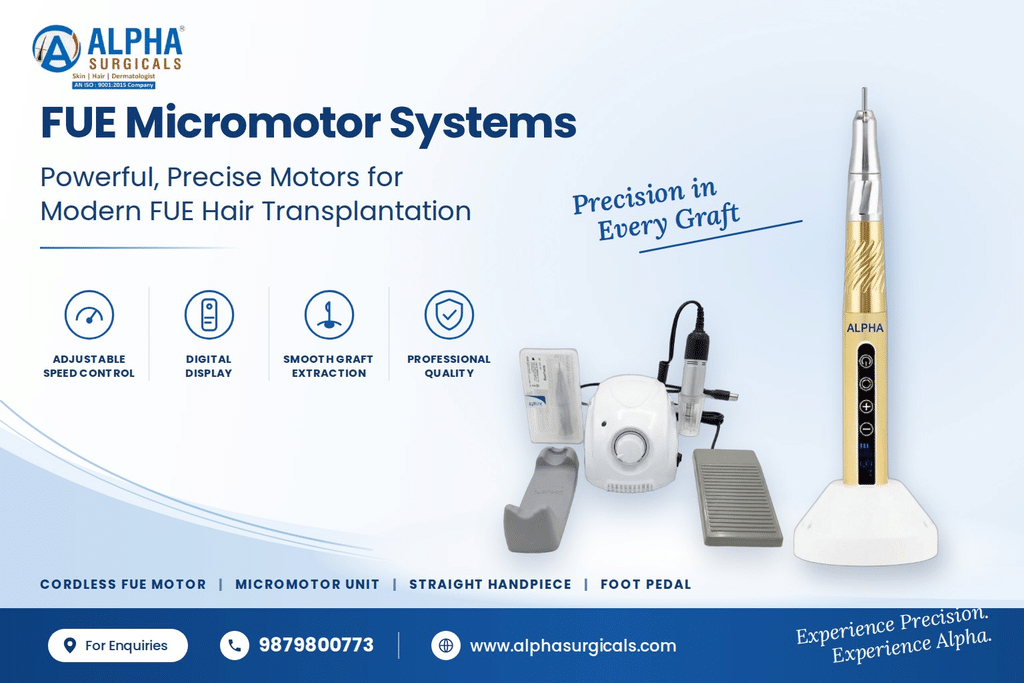
A micromotor can drive a compatible FUE punch during follicular-unit extraction. Alpha Surgical offers micromotor systems specifically described for FUE hair transplantation.
The actual punch size, speed, technique, and operating parameters should always follow the specific device instructions and the practitioner’s established clinical protocol.
4. Skin Grafting Applications
Some medical micromotor systems support dermatome and skin-grafting applications through compatible handpieces.
Professional motor systems are available for applications involving drilling, grinding, dermabrasion, and dermatome use in reconstructive surgery.
However, clinicians should confirm compatibility before connecting any attachment to a micromotor system.
5. Selected Dermatologic Surgical Applications
A micromotor may support additional dermatologic or dermatosurgical applications when the manufacturer specifically designs the system and attachments for those uses.
Consequently, professionals should always evaluate the complete system rather than selecting a motor based only on its RPM range.
Key Benefits of Micromotors in Dermatology
The micromotor uses in dermatology offer several workflow-related advantages when professionals select an appropriate system.
Controlled Operation
A suitable micromotor provides controlled rotary movement. This can help professionals maintain consistent instrument movement during appropriate procedures.
Adjustable Performance
Many professional systems provide adjustable speed or other controls. The exact range varies by model.
For example, different medical micromotor systems can offer substantially different operating ranges and torque specifications.
Instrument Compatibility
A micromotor becomes more versatile when it supports compatible handpieces and attachments for the intended application.
Ergonomic Handling
A well-designed handpiece can support comfortable handling during procedures. Alpha Surgical highlights ergonomic and cordless features on its 3-in-1 micromotor product page.
Efficient Workflow
Motorized instruments can reduce repetitive manual movement during selected procedures. As a result, they can support an organized professional workflow.
Micromotor Components
A typical professional micromotor system may include several components.
Control Unit
The control unit manages the motor’s operating parameters. Depending on the model, it may include a digital display and controls for speed or direction.
Motor and Handpiece
The motor drives the handpiece, while the handpiece transfers rotary movement to the compatible attachment.
Foot Control
Some systems include a foot pedal that allows hands-free operation.
Attachments
Different procedures require different attachments. These may include compatible punches, burs, dermatomes, or other specialized instruments.
Therefore, professionals should verify compatibility between the motor, handpiece, attachment, and intended application.
How to Choose a Micromotor for Dermatology
When evaluating a dermatology micromotor, consider the following factors:
1. Intended Application
First, identify the procedure or clinical application. A system designed for FUE extraction may have different requirements from a system designed for dermabrasion or dermatome applications.
2. Speed Range
Next, review the manufacturer’s specified speed range. More RPM does not automatically mean better performance because the appropriate speed depends on the attachment and procedure.
3. Torque
Torque can influence how the motor performs under load. Therefore, professionals should review both speed and torque specifications.
4. Handpiece Compatibility
Check whether the system supports the handpieces and attachments required for your intended application.
5. Ergonomics
A comfortable handpiece can support controlled handling during longer procedures.
6. Cleaning and Maintenance
Finally, review the manufacturer’s cleaning, sterilization, maintenance, and service instructions before selecting a system.
Alpha Surgical Micromotors for Professional Applications
Alpha Surgical focuses on professional instruments for dermatology, hair restoration, aesthetics, and related surgical applications.
Its product range includes micromotor systems for applications such as FUE hair transplantation and vitiligo procedures. The company’s 3-in-1 cordless micromotor, for example, is described for vitiligo, FUE hair transplant, and nail biopsy applications.
Alpha Surgical also offers motor-compatible punch instruments for vitiligo mini-punch grafting.
Therefore, professionals can evaluate Alpha Surgical micromotor systems according to their specific procedural requirements and compatible instruments.
Why Instrument Compatibility Matters
A micromotor alone does not determine its clinical application. The handpiece and attachment also play an important role.
For example, a micromotor can drive a punch for a selected grafting application or a compatible abrasive instrument for dermabrasion. However, each combination requires appropriate compatibility and intended-use guidance.
Therefore, healthcare professionals should always check the manufacturer’s specifications before using a micromotor with a particular attachment.
Micromotor Maintenance and Safety
Proper maintenance helps preserve equipment performance and supports clinical hygiene.
Professionals should:
- Follow the manufacturer’s cleaning instructions.
- Follow the manufacturer’s sterilization instructions for components that require sterilization.
- Inspect handpieces and attachments before use.
- Check cables, connectors, and controls where applicable.
- Use only compatible attachments.
- Follow the device’s operating instructions.
- Maintain appropriate clinical infection-control procedures.
Furthermore, professionals should use medical equipment only for its intended purpose and according to applicable clinical protocols.
Frequently Asked Questions
What are the main micromotor uses in dermatology?
The micromotor uses in dermatology can include selected applications such as dermabrasion, vitiligo grafting, hair transplantation, and skin-grafting procedures when the appropriate compatible instruments are used.
Can a micromotor be used for hair transplantation?
Yes. Certain micromotor systems are designed to work with compatible FUE punches for follicular-unit extraction. Alpha Surgical offers micromotor systems described for FUE hair transplantation.
Can a micromotor be used for dermabrasion?
Certain micromotor systems can drive compatible abrasive attachments. Published dermatology literature describes micromotor-assisted dermabrasion using diamond burs in selected clinical applications.
Can one micromotor perform every dermatology procedure?
No. The appropriate application depends on the motor, handpiece, attachment, specifications, and manufacturer’s intended use.
What should I consider when choosing a dermatology micromotor?
Consider the intended application, speed range, torque, handpiece compatibility, ergonomics, maintenance requirements, and the manufacturer’s instructions.
Does Alpha Surgical provide micromotors?
Yes. Alpha Surgical offers professional micromotor systems, including products described for FUE hair transplantation and vitiligo applications.
Conclusion
The micromotor uses in dermatology extend across several professional applications, including selected dermabrasion, grafting, hair-restoration, and skin-grafting workflows. The correct combination of motor, handpiece, attachment, and operating parameters allows professionals to match the equipment to the intended procedure.
Alpha Surgical provides professional micromotors and compatible dermatology and hair-restoration instruments for healthcare professionals. By offering specialized equipment for different clinical applications, Alpha Surgical supports professionals in building procedure-specific instrument setups.
Follow us on Instagram : https://www.instagram.com/alphasurgicals?igsh=cTdjYWNtaXkxazlr
Follow us on Facebook : https://www.facebook.com/alphasurgicals/
Watch and learn suturing techniques : https://alphasurgicals.com/educational-surgical-videos/
Visit our store to purchase other products : https://alphasurgicals.com/store/