What Are Dermatology Surgical Instruments?
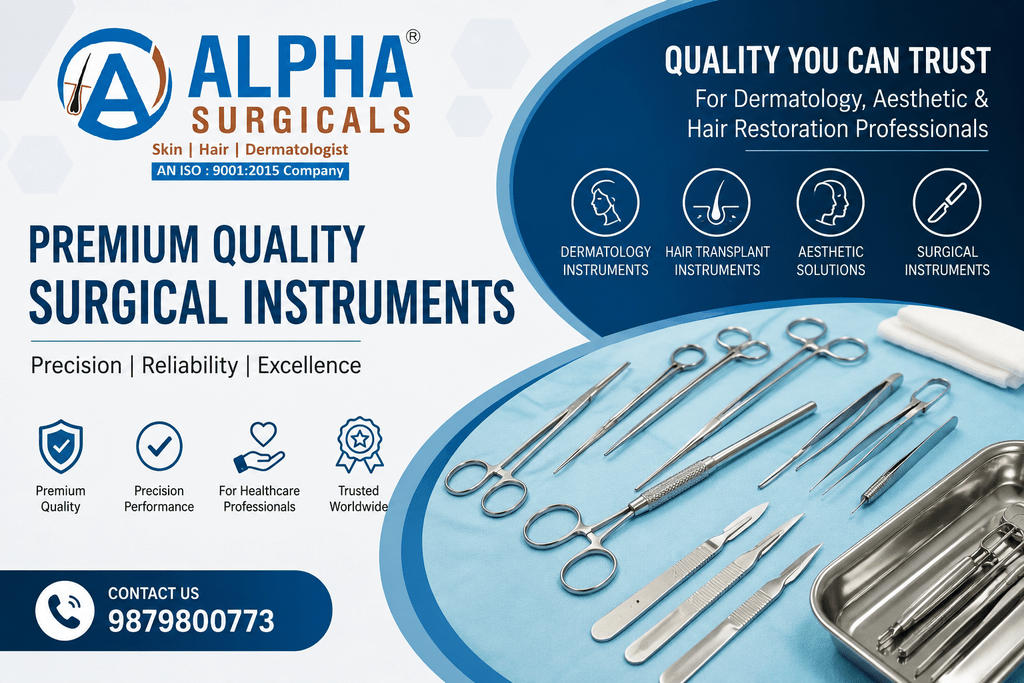
Dermatology surgical instruments are specialized medical tools used by healthcare professionals during dermatological and minor surgical procedures. These instruments help professionals perform tasks such as cutting, grasping, dissecting, suturing, and tissue handling.
Because different procedures require different tools, healthcare professionals can select instruments according to the treatment area, procedure type, and clinical technique. Therefore, understanding the main categories can help professionals choose suitable instruments for their workflow.
Types of Dermatology Surgical Instruments
Several types of dermatology surgical instruments are used in professional clinical settings. Each instrument serves a specific purpose.
1. Scalpels and Surgical Blades
Scalpels and surgical blades provide precise cutting during selected dermatological procedures. Their design allows healthcare professionals to make controlled incisions when required.
2. Scissors
Dermatology scissors come in different shapes and sizes. Professionals can use them for cutting tissue, sutures, dressings, or other materials depending on the procedure.
3. Forceps
Forceps help professionals grasp, hold, and manipulate tissue or other materials. Different tip designs allow clinicians to select an appropriate instrument for specific applications.
4. Needle Holders
Needle holders help healthcare professionals control surgical needles during suturing. Consequently, they play an important role in procedures that require wound closure.
5. Curettes
Curettes feature a spoon-shaped or looped working end. Professionals may use them for selected dermatological procedures that require controlled tissue removal.
6. Retractors
Retractors help hold tissue away from the working area. As a result, they can improve access and visibility during selected procedures.
7. Punch Instruments
Punch instruments are commonly associated with dermatological sampling and hair-restoration procedures. Different punch sizes and designs can suit different clinical applications.
Dermatology Surgical Instruments: Uses
Healthcare professionals use dermatology surgical instruments across a wide range of clinical applications.
Common uses include:
- Skin biopsies
- Minor skin procedures
- Lesion removal
- Wound closure
- Tissue handling
- Scar-related procedures
- Dermatological sampling
- Hair-restoration procedures
- Selected aesthetic procedures
However, the appropriate instrument depends on the procedure and professional assessment.
Applications of Dermatology Surgical Instruments
Dermatology surgical instruments support several areas of professional healthcare.
Clinical Dermatology
Dermatologists use specialized instruments for selected diagnostic and minor surgical procedures.
Aesthetic Medicine
Furthermore, aesthetic professionals may use specific instruments during procedures that require precise tissue handling or minor surgical techniques.
Hair Restoration
Hair-restoration professionals use specialized instruments for follicular-unit harvesting, implantation, and related procedures.
Scar Treatment
Certain dermatological procedures require specialized tools for tissue manipulation and scar-related treatment techniques.
How to Choose Dermatology Surgical Instruments
Selecting the right dermatology surgical instruments requires attention to several factors.
Procedure Requirements
First, identify the intended procedure and the type of instrument required. Different procedures need different designs and specifications.
Instrument Design
Next, consider factors such as tip shape, size, length, and working-end design. These features can influence handling and suitability.
Material Quality
Medical instruments should use appropriate materials and manufacturing standards for their intended application.
Ergonomics
Comfortable handling can support precise instrument control during professional procedures. Therefore, professionals should consider the instrument’s grip and overall design.
Maintenance
Finally, healthcare professionals should follow appropriate cleaning, sterilization, storage, and maintenance procedures according to the instrument manufacturer’s instructions.
Why Quality Matters
Quality plays an important role when selecting dermatology surgical instruments.
Well-designed instruments can provide consistent handling and support professional workflows. Moreover, suitable manufacturing and material quality can contribute to reliable instrument performance.
Healthcare professionals should therefore select products from reliable medical-supply providers and follow the manufacturer’s instructions for use and maintenance.
Alpha Surgical – Professional Dermatology Instruments
Alpha Surgical provides a range of professional dermatology surgical instruments and medical products for healthcare applications.
Our product range supports professionals working in dermatology, aesthetic medicine, hair restoration, and related clinical fields.
With a focus on quality, reliability, and practical clinical requirements, Alpha Surgical aims to provide dependable products for professional healthcare workflows.
Furthermore, our range includes surgical and procedural products designed to meet the needs of healthcare professionals across different applications.
Explore Alpha Surgical for professional dermatology and surgical products.
Benefits of Choosing the Right Instruments
The right dermatology surgical instruments can support:
- Better instrument control
- Consistent handling
- Efficient clinical workflows
- Procedure-specific requirements
- Professional working conditions
However, instrument selection should always match the procedure, professional expertise, and manufacturer’s intended use.
Frequently Asked Questions
What are the common types of dermatology instruments?
Common types include scalpels, scissors, forceps, needle holders, curettes, retractors, and punch instruments.
What are dermatology surgical instruments used for?
Professionals may use them for procedures such as skin biopsies, lesion removal, wound closure, tissue handling, scar procedures, and selected hair-restoration applications.
How should I choose dermatology surgical instruments?
Consider the procedure, instrument design, size, material, ergonomics, intended use, and maintenance requirements before selecting a product.
Why is instrument quality important?
Quality instruments can support consistent handling, reliable performance, and professional clinical workflows when they are used and maintained according to the manufacturer’s instructions.
Follow us on Instagram : https://www.instagram.com/alphasurgicals?igsh=cTdjYWNtaXkxazlr
Follow us on Facebook : https://www.facebook.com/alphasurgicals/
Watch and learn suturing techniques : https://alphasurgicals.com/educational-surgical-videos/
Visit our store to purchase other products : https://alphasurgicals.com/store/